One Bug, Two Central Banks Offline: What Happened in South Asia
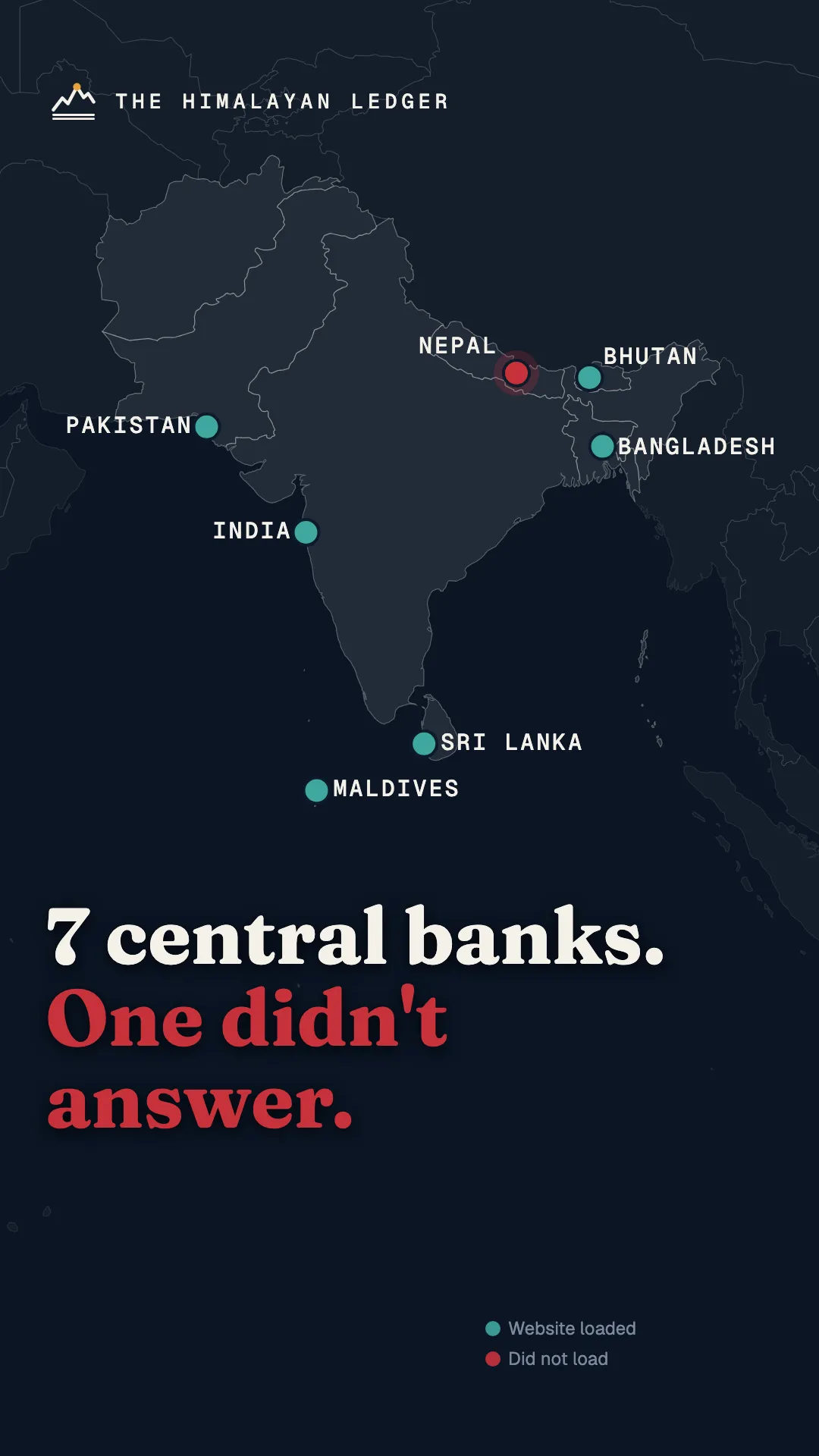
On 25 October we tried to open the websites of seven central banks in South Asia. Six opened. No hack was reported; the sites that went dark were switched off on purpose, after two critical flaws were found in PHP.
The story in brief
On 21 October the PHP project, which makes the software behind about seven in ten websites, released fixes for two critical flaws that could let an attacker take over a server without logging in. Details had leaked the day before, and attacks were seen within hours. The fixes only reached PHP 8.2 and newer. Organisations on older versions had a choice: update, or unplug.
Many unplugged. In Nepal, thousands of government websites run on one shared platform, and they went offline together, along with bank websites, though QR payments and mobile banking kept working. When we checked on 25 October, Nepal Rastra Bank’s website didn’t respond. Bangladesh Bank’s had just come back after three days of “under maintenance”.
No hack was reported in either country. The next deadline is 31 December 2026, when PHP 8.2 stops getting updates too.
Key numbers
- 01
6 of 7
South Asian central bank websites that opened when we checked on 25 October. Nepal's didn't respond. (Pakistan's blocked our automated check, so we opened it in a browser.)
Our check of all seven homepages25 Oct 2026
- 02
69.2%
Websites using PHP, among those whose server-side language is known
W3Techs25 Oct 2026
- 03
1 in 3+
PHP websites on major versions (PHP 7, 5 and 4) that get no official fix. Our sum of W3Techs' shares; the true share is higher, since PHP 8.0 and 8.1 are also out of support.
W3Techs25 Oct 2026
- 04
9.2
Severity score (CVSS v4.0, out of 10) of each of the two flaws, CVE-2026-109618 and CVE-2026-109619
PHP project security release21 Oct 2026
- 05
3 days
How long Bangladesh Bank's website stayed offline from 22 October; visitors saw "The Service is under Maintenance"
Prothom Alo; The Daily Star24–25 Oct 2026
- 06
31 Dec 2026
The date PHP 8.2 reaches end of life and stops receiving fixes from the PHP project
PHP project, release notes for 8.2.3521 Oct 2026
The data
Who was left without a fix
The PHP project fixed the two flaws only in its supported versions. Everything older had to be updated, patched by a vendor, or taken offline.
Show the numbers
| Period | Value (%) |
|---|---|
| PHP 8 | 65.5 |
| PHP 7 | 26.8 |
| PHP 5 | 7.7 |
| PHP 4 | 0.1 |
Source: W3Techs, usage statistics, 25 Oct 2026.
- Fixed releases came out for PHP 8.5, 8.4, 8.3 and 8.2. "PHP 8.1 and older no longer receive updates from the PHP project."
- About a third of PHP websites (PHP 7, 5 and 4 together, 34.6%) run a major version with no official fix, and some PHP 8 sites are on 8.0 or 8.1, which are also unsupported.
- The PHP project said only an update is a complete fix, which is why many organisations chose to switch sites off rather than wait.
Caveat. Why some sites went dark and others didn't is our reading of the evidence. When we say we found no outage reports for a country, it means we found none, not that its sites were safe.
Shorts from this story
Sources
Every figure in the video, and where it comes from. We link the original wherever we can.
- 01
PHP project, security release of 21 Oct 2026 (CVE-2026-109618, CVE-2026-109619 · fixed versions · PHP 8.1 and older · PHP 8.2 end of life)
php.net - 02
W3Techs, usage of PHP and PHP versions (25 Oct 2026)
w3techs.com - 03
watchTowr, PHP2Shell (leak and first exploitation, 21 Oct 2026)
watchtowr.com - 04
Kathmandu Post, 23 Oct 2026
kathmandupost.com - 05
Kathmandu Post, 25 Oct 2026
kathmandupost.com - 06
Ratopati, 23 Oct 2026
english.ratopati.com - 07
Ratopati, 25 Oct 2026
english.ratopati.com - 08
Prothom Alo, 24 Oct 2026
en.prothomalo.com - 09
Prothom Alo, 25 Oct 2026
en.prothomalo.com - 10
The Daily Star
thedailystar.net - 11
bdnews24
bdnews24.com - 12
The Business Standard
tbsnews.net - 13
Insurance Business UK, 22 Oct 2026 (UK and Europe)
insurancebusinessmag.com - 14
Our check: we opened the homepage of each central bank (Bangladesh, Bhutan, India, Maldives, Nepal, Pakistan, Sri Lanka) on 25 Oct 2026. Pakistan's was opened in a browser because its security service blocks automated checks.
Our analysis: "at least 1 in 3" adds W3Techs' shares of PHP 7, 5 and 4 among PHP websites. Why some sites went dark and others didn't is our reading of the evidence, labelled in the video. "No outage reports found" means we found none, not that those sites were safe.
Transcript
Read the full narration
0:00 Seven central banks, one red dot
On the 25th of October, we tried to open the websites of 7 central banks in South Asia. 6 opened. One didn't answer at all: Nepal's.
Bangladesh's had only just come back, after 3 days offline. Neither was reported hacked. Both were switched off on purpose, as a precaution, because of a flaw in the software behind most of the world's websites.
So why did some go dark, while others stayed online? The answer is one simple rule about old software.
0:32 The bug in one picture
The software is called PHP. It's the engine that builds a web page each time you open one. By one count, it runs about 7 in 10 websites. Think of it as the most common door lock in the world.
In this story, it was on the websites of banks and government offices. Here's how the week unfolded. On the 20th of October, details of two flaws in that lock leaked online, before a fix was ready.
Both could let a stranger run their own code on a website's server, without logging in. PHP's own team rated them 9.2 out of 10 for severity. The next day, the 21st, they released the fix.
That same day, a security firm saw attackers already trying the flaws.
1:17 The rule: new locks get fixed, old ones don't
And here's the rule that explains everything that followed. Software versions get security fixes for a few years. Then support ends, and the fixes stop. So the fix came only for the four versions of PHP that are still supported.
PHP 8.1 and anything older got no new release. Their support had already ended. And plenty of the web still runs on those old versions. At least a third of all PHP websites.
Why would anyone still run old software? In Nepal, officials pointed to older systems maintained by outside vendors, some with code that had never been audited. So every website owner had two choices.
Update, if they could. Or unplug the site until they could. Britain's cyber security agency said it plainly: update, and if you can't, consider taking the system offline.
Across Europe, many unplugged. City councils in Britain, government services in Finland, and even the Dutch cyber security agency's own website. Remember that fork.
Update, or unplug. Now, back to South Asia.
2:28 Nepal: one switch, thousands of sites
Start with Nepal, where the news arrived in the middle of Dashain, the country's biggest festival, with offices closed for a week. Most Nepali government websites run on one shared platform. So they could be switched off centrally, all at once.
Thousands of government websites went offline together. On the 22nd, the national cyber security centre told organisations to update their systems. The central bank shut its own website, and asked banks to take theirs offline where needed.
Several did. So did the provident fund and the social security fund. While its site was down, the central bank posted its daily exchange rates on social media instead.
But the money kept moving. The bankers' association said mobile banking and QR payments worked normally. And banks reported no loss of customer data or money. And the central bank was clear: a website being offline does not mean it has been hacked.
What did go dark were everyday services. The form to apply for a driving licence. The daily vegetable prices from Kathmandu's main wholesale market. Even the system that tracks freight trucks.
Drivers were told to carry their paper bills instead. Some banks were back within a day or two. Many government sites were still waiting. Because for old systems, a patch alone isn't enough.
The head of the government's software centre said some old code had never even been checked. The plan is to fix the shared platform once, and bring the sites back together. When we checked, on the 25th, the central bank's site was still down.
4:09 Bangladesh: three days dark
So far: a flaw, a fix only for new software, and in Nepal, one switch that turned off thousands of sites. Now the second red dot. On the 22nd of October, Bangladesh's government cyber team issued an urgent alert.
The same day, Bangladesh Bank, the central bank, took its website offline. Like Nepal, it happened during a long holiday. Six other banks followed, and so did the government's land services website. That one matters.
Around 300,000 people a month use it to register changes in land ownership. Visitors to the central bank's site saw a short note: the service is under maintenance. Its spokesperson said the bank wanted to ensure full security before bringing it back.
And its links with commercial banks kept running. Only the public website went dark. Other regulators, like the stock exchange and the securities commission, kept their sites up.
By the 25th, the central bank's website was back.
5:13 The rest of the map
So why did these two go dark, and not the rest? On the 25th, the central bank sites of India, Pakistan, Sri Lanka, the Maldives and Bhutan all opened. We found no reports of them going offline.
Staying online doesn't prove a site was safe. It means its owners didn't have to unplug it. Our reading: it comes back to the fork. Sites on supported versions could update the same day.
Sites on old software, or whose code nobody had checked in years, had only one safe option. Nepal's own officials said some government systems run PHP 8.1 or older, the versions that got no new release.
5:53 The next deadline
And this won't be the last time. PHP 8.2, one of the versions that just got fixed, loses support on the 31st of December. Any website still on it after that could face the same fork the next time a flaw appears: update, or unplug.
For South Asia's banks and governments, the cheapest fix isn't a faster shutdown. It's keeping the software up to date. Every source, and the date we checked each one, is in the description.
If this helped, like it, share it with someone who'd find it useful, and subscribe to The Himalayan Ledger. Tap the bell so you don't miss the next one.
Corrections
None so far. If you spot an error, tell us and we'll fix it here, with the date. How we handle corrections.
Credits
Map: Natural Earth. Video: Pexels and Pixabay contributors.
Music: Pixabay (AtlasAudio, SigmaMusicArt, leberch).
Written and produced by The Himalayan Ledger. The narration is an AI-generated voice (Google Cloud Text-to-Speech) reading our own script.
More from the Ledger
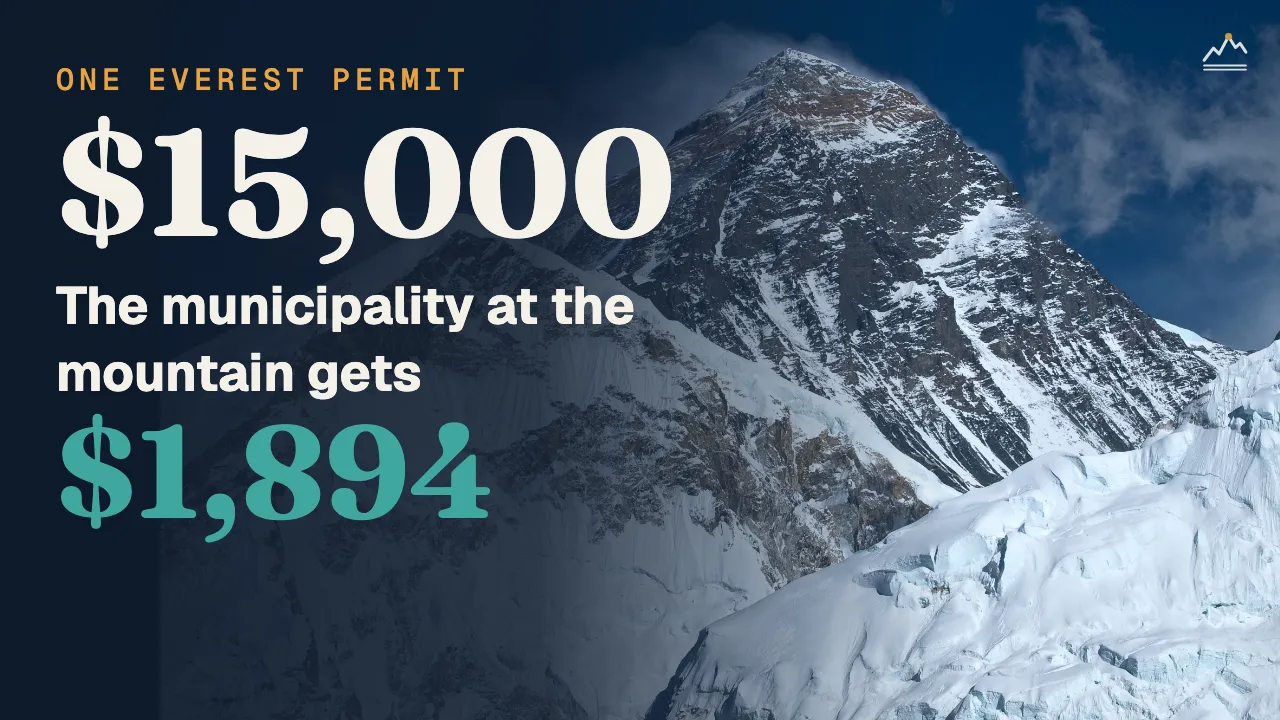
· Everest
Who Gets the Money From Mount Everest?
Every foreign climber pays Nepal $15,000 to climb Everest. We followed one permit through Nepal's own records, then the rest of the bill, the people who do the climbing, and the mountain's own bill.
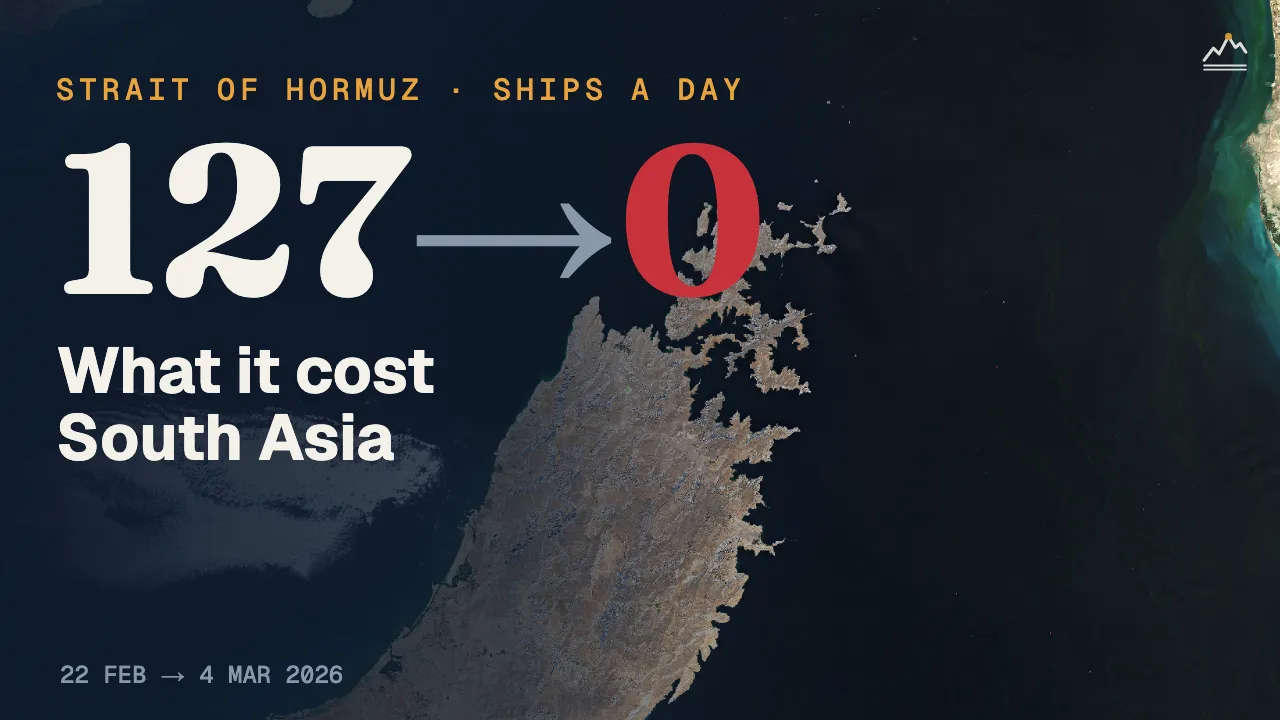
· Strait of Hormuz
Hormuz: What Seven Months of Shock Cost South Asia
The Strait of Hormuz is nowhere near South Asia, yet seven months of disruption put Sri Lankan drivers on fuel quotas, cut factory hours in Bangladesh and pushed up prices from Karachi to Kathmandu.
· Ganges
The River Deal That Expires This December
India and Bangladesh have split the dry-season Ganges at Farakka under one treaty since 1996. It was signed for 30 years, and it runs out on 12 December 2026.